مبادرة ميثاق طرابلس والشمال للعمل الأهلي المسؤول
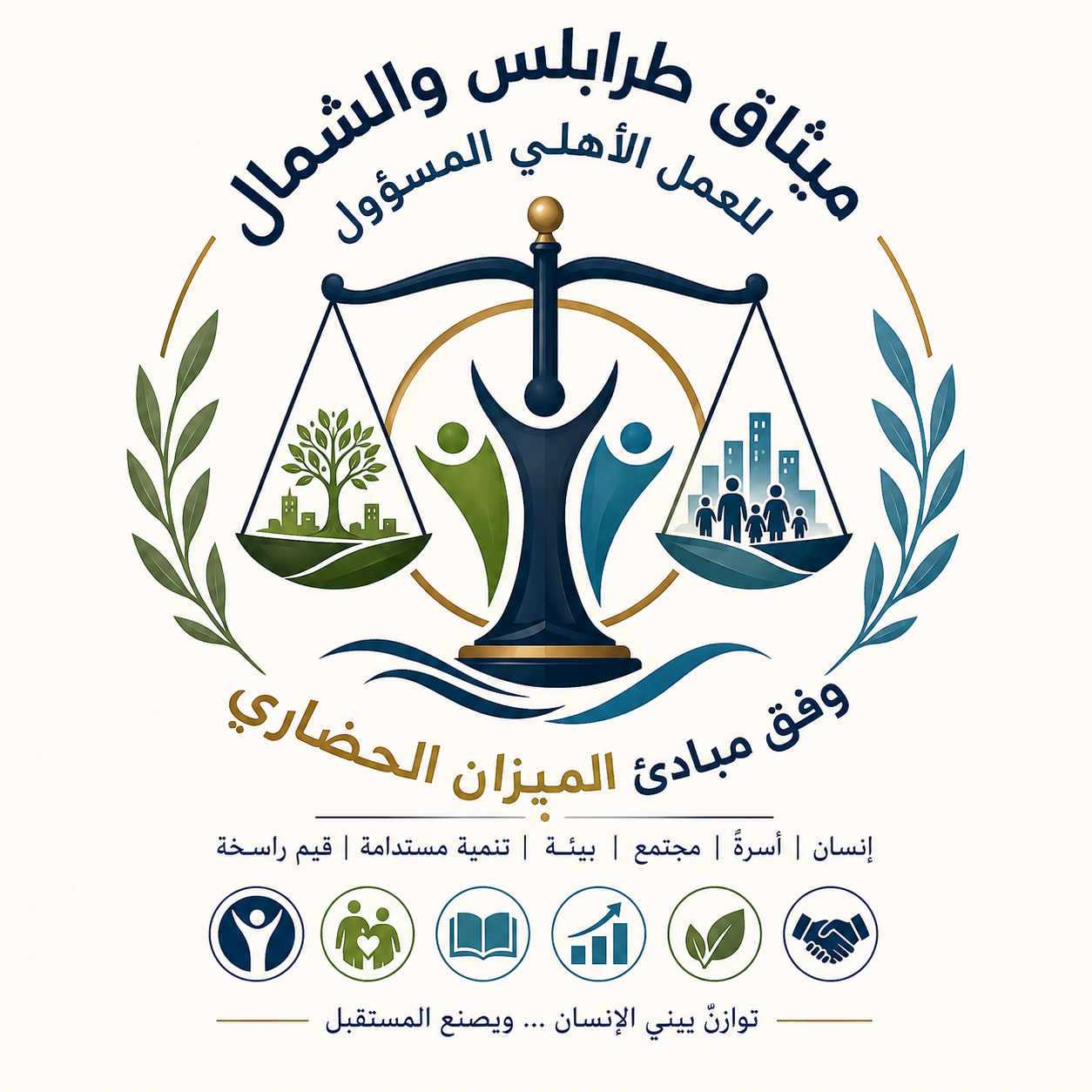
ميثاق طرابلس والشمال للعمل الأهلي المسؤول
وفق مبادئ «الميزان الحضاري»
مبادرة مقدّمة من جمعية عينا المدينة اللبنانية
أولاً: الديباجة
انطلاقاً من المسؤولية المشتركة في حماية الإنسان وصون كرامته، وتعزيز تماسك الأسرة، ورعاية الطفولة والناشئة، والارتقاء بالتعليم والتنمية، وحماية البيئة، وترسيخ قيم التكافل والشفافية والمسؤولية الاجتماعية؛
وإيماناً بأن العمل الأهلي شريك أساسي في بناء المجتمع، وأن التنمية الحقيقية لا تُقاس بحجم الأموال المنفقة أو عدد الأنشطة المنفذة فحسب، بل بما تتركه من أثر مستدام ومتوازن في الإنسان والمجتمع والبيئة؛
وتأكيداً على احترام الدستور والقوانين والأنظمة المرعية الإجراء، وصلاحيات المؤسسات الرسمية والبلديات والجهات المختصة؛
تقترح «جمعية عينا المدينة اللبنانية» اعتماد هذا الميثاق إطاراً تشاورياً وأخلاقياً طوعياً لتنظيم الشراكة بين مؤسسات المجتمع الأهلي والبلديات والجهات التربوية والدينية وسائر الشركاء، بما يعزز جودة العمل الأهلي وشفافيته وأثره المجتمعي.
ويستند هذا الميثاق إلى مفهوم «الميزان الحضاري» بوصفه منهجاً استرشادياً يقوم على تحقيق التوازن بين:
- الحقوق والواجبات.
- الحرية والمسؤولية.
- التنمية والقيم.
- المصلحة الفردية والمصلحة العامة.
- التقدم المادي والارتقاء الإنساني.
- حاجات الحاضر وحقوق الأجيال المقبلة.
ثانياً: ما هو «الميزان الحضاري»؟
«الميزان الحضاري» هو إطار استرشادي لتقييم أثر السياسات والمشاريع والبرامج والمبادرات في الإنسان والأسرة والمجتمع والبيئة، بحيث لا يُنظر إلى نجاح أي مشروع من زاوية واحدة، بل من خلال مجموعة متوازنة من المعايير الإنسانية والاجتماعية والتربوية والاقتصادية والبيئية والقيمية.
وبذلك لا يكون «الميزان الحضاري» سلطة بديلة عن الدولة أو القانون، ولا هيئة لمنح التراخيص أو سحبها، بل منهجاً للتفكير والتقييم والحوار وتحسين جودة العمل الأهلي.
ثالثاً: مبادئ الميثاق العشرة
المادة الأولى: كرامة الإنسان
تُبنى المبادرات والبرامج على احترام الإنسان وكرامته وحريته وحقوقه، وتحظر أي ممارسة تنطوي على الإهانة أو الاستغلال أو التمييز أو الاتجار بالحاجة الإنسانية.
المادة الثانية: حماية الأسرة والطفولة
تُعطى الأسرة والطفولة والناشئة أولوية خاصة في التخطيط للبرامج والأنشطة، مع اعتماد معايير واضحة لحماية الأطفال وسلامتهم وخصوصيتهم وصون كرامتهم.
المادة الثالثة: احترام القيم والخصوصية الثقافية
تلتزم المبادرات باحترام القيم الدينية والثقافية والاجتماعية للمجتمع المحلي، وباعتماد خطاب تربوي ومجتمعي مسؤول يراعي خصوصية الأسر والبيئة الثقافية التي يعمل فيها.
المادة الرابعة: الشفافية والإفصاح
تلتزم الجهات المشاركة، بالقدر الذي يسمح به القانون وطبيعة النشاط، بالشفافية في أهداف المشاريع ومصادر تمويلها والجهات المنفذة والشركاء والنتائج المتوقعة، وبالإفصاح عن أي تضارب محتمل في المصالح.
المادة الخامسة: أولوية الاحتياجات الحقيقية
تُوجَّه المبادرات، قدر الإمكان، إلى معالجة الاحتياجات الفعلية للمجتمع، ولا سيما التعليم والتمكين الاقتصادي والرعاية الاجتماعية والصحية وحماية البيئة وتحسين الظروف المعيشية.
المادة السادسة: التنمية المستدامة
لا يقتصر تقييم المشروع على ما ينجزه أثناء فترة التمويل، بل يُنظر إلى قدرته على إنتاج أثر مستدام، وتعزيز الاعتماد على القدرات المحلية، وحماية الموارد وحقوق الأجيال المقبلة.
المادة السابعة: حماية البيئة
تُراعى الآثار البيئية والاجتماعية للمشاريع والأنشطة، ويُشجَّع اعتماد مبادئ الحد من التلوث، وإدارة النفايات، وترشيد الموارد، وحماية المساحات الخضراء والمياه والهواء والتنوع الحيوي.
المادة الثامنة: المهنية وعدم الاستغلال
يُشجَّع اعتماد معايير مهنية واضحة في تنفيذ المشاريع، ومنع استغلال العمل الإنساني لتحقيق منافع شخصية أو سياسية أو تجارية غير معلنة.
المادة التاسعة: المشاركة والشراكة
يقوم العمل الأهلي المسؤول على التعاون بين الجمعيات والبلديات والمؤسسات التربوية والدينية والاقتصادية والمهنية والمجتمعية، وعلى إشراك المستفيدين في تحديد احتياجاتهم وتقييم النتائج.
المادة العاشرة: قياس الأثر
لا يُقاس نجاح المبادرات بعدد الأنشطة أو المستفيدين فقط، بل بمدى قدرتها على إحداث تغيير إيجابي قابل للقياس في حياة الإنسان والمجتمع والبيئة.
رابعاً: بطاقة «الميزان الحضاري»
تقترح جمعية عينا المدينة اللبنانية اعتماد بطاقة استرشادية لتقييم المبادرات والمشاريع، تتضمن عشرة أبعاد:
البعد| السؤال الأساسي
الإنسان| هل يحفظ المشروع كرامة الإنسان وينمي قدراته؟
الأسرة| هل يعزز استقرار الأسرة وتماسكها؟
الطفل| هل يضمن حماية الطفل وخصوصيته ومصلحته؟
التعليم| هل يقدم معرفة أو مهارة ذات قيمة حقيقية؟
القيم| هل يحترم القيم الدينية والثقافية للمجتمع؟
الاقتصاد| هل يخلق أثراً اقتصادياً حقيقياً ومستداماً؟
البيئة| هل يحافظ على البيئة والموارد؟
المجتمع| هل يعزز التكافل والمشاركة والمسؤولية؟
الشفافية| هل الأهداف والتمويل والشركاء واضحون؟
الاستدامة| هل يستمر الأثر بعد انتهاء المشروع؟
ويمكن، في مرحلة لاحقة، تطوير هذه البطاقة إلى نظام نقاط ومعايير كمية، بما يسمح بإصدار «تقييم حضاري» للمشاريع والمبادرات.
خامساً: آلية الشراكة والمتابعة
تقترح المبادرة إنشاء «المنتدى التشاوري للعمل الأهلي والميزان الحضاري» بصفة تشاورية وتطوعية، يضم، بحسب الإمكان:
- ممثلين عن البلديات واتحادات البلديات.
- ممثلين عن المؤسسات الدينية.
- ممثلين عن المؤسسات التربوية.
- ممثلين عن الجمعيات والمنظمات الأهلية.
- اختصاصيين في القانون والتربية والاجتماع والاقتصاد والبيئة.
- ممثلين عن المجتمع المحلي وأصحاب الخبرة.
وتكون مهمته:
- تبادل المعلومات والخبرات.
- مناقشة الاحتياجات الاجتماعية والتنموية.
- وضع توصيات ومعايير استرشادية للعمل الأهلي.
- تشجيع الشفافية والإفصاح.
- تطوير مؤشرات «الميزان الحضاري».
- رصد التحديات المشتركة واقتراح الحلول.
- تشجيع المشاريع المشتركة بين الجمعيات والبلديات.
- إعداد تقارير دورية عن احتياجات المجتمع وأولويات التنمية.
ولا تُفهم هذه الآلية بأي حال على أنها تحل محل السلطات القانونية المختصة أو تمنح اللجنة صلاحيات ترخيص أو منع أو عقوبة، وإنما تعمل ضمن القوانين والأنظمة المرعية الإجراء.
سادساً: مبدأ المعالجة قبل العقوبة
في حال ظهور ملاحظات جدية على أي نشاط أو مشروع، يُستحسن اعتماد تدرج تشاوري يقوم على:
- توثيق الملاحظة.
- إبلاغ الجهة المعنية بها.
- منحها فرصة التوضيح أو التصحيح.
- إجراء مراجعة تشاورية عند الحاجة.
- إحالة أي مخالفة قانونية فعلية إلى الجهة الرسمية المختصة.
- اتخاذ الإجراءات القانونية من قبل الجهة صاحبة الصلاحية حصراً.
وبذلك يحافظ الميثاق على التوازن بين حماية المجتمع واحترام استقلالية المؤسسات وحقوقها القانونية.
سابعاً: الالتزام الطوعي بالميثاق
تُدعى الجمعيات والمؤسسات والجهات الراغبة إلى إعلان التزامها الطوعي بمبادئ الميثاق، ويمكن للجهات الموقعة أن تستخدم عبارة:
«ملتزمون بمبادئ الميزان الحضاري للعمل الأهلي المسؤول»
على المواد التعريفية الخاصة بها، وفق آلية وشروط اعتماد يتم تطويرها لاحقاً بالتوافق بين الشركاء.
ثامناً: ميثاق النزاهة والتمويل المسؤول
تلتزم الجهات الراغبة في الانضمام إلى الميثاق بالسعي إلى:
- وضوح مصادر التمويل.
- الإعلان عن الجهات الداعمة للمشاريع حيثما يسمح القانون.
- تجنب تضارب المصالح.
- عدم استخدام المساعدات الإنسانية وسيلة للضغط أو الابتزاز أو الاستغلال.
- توجيه التمويل إلى الغاية المعلنة للمشروع.
- اعتماد آليات واضحة للتقييم والمساءلة.
تاسعاً: الأولويات المقترحة لطرابلس والشمال
يقترح الميثاق أن تتجه الشراكات والمبادرات المستقبلية، وفق نتائج الدراسات والحاجات الفعلية، إلى مجالات منها:
- مكافحة الفقر والهشاشة الاجتماعية.
- التمكين الاقتصادي وفرص العمل.
- التعليم والدعم المدرسي والمهني.
- حماية الأطفال والناشئة.
- الرعاية الصحية والاجتماعية.
- حماية البيئة وإدارة النفايات.
- تحسين المجال العام.
- دعم المبادرات الشبابية.
- تعزيز الثقافة المدنية والمسؤولية المجتمعية.
- دعم الأسر الأكثر حاجة.
عاشراً: دعوة إلى الشراكة
إن جمعية عينا المدينة اللبنانية، وهي تطرح هذا الميثاق، لا تنطلق من موقع الوصاية على العمل الأهلي، ولا تدّعي احتكار تعريف المصلحة العامة، وإنما تدعو إلى حوار مؤسسي مفتوح يشارك فيه أصحاب الاختصاص والقرار والميدان والمجتمع المحلي.
فالغاية ليست إنشاء سلطة جديدة فوق السلطات القائمة، وإنما بناء ثقافة جديدة للعمل الأهلي؛ ثقافة تجعل كل مشروع قابلاً للسؤال:
ماذا أضاف للإنسان؟
ماذا حفظ للأسرة؟
ماذا قدم للطفل؟
ماذا أصلح في المجتمع؟
ماذا حمى من البيئة؟
ماذا أنتج من معرفة أو عمل أو كرامة؟
وماذا سيبقى منه بعد انتهاء التمويل؟
وهنا يكون «الميزان الحضاري» أداةً لقياس الأثر، لا أداةً للحكم على الناس؛ ومنهجاً للتوازن، لا وسيلةً للإقصاء.
الحادي عشر: الدعوة إلى اللقاء التشاوري
بناءً على ما تقدم، تدعو «جمعية عينا المدينة اللبنانية» أصحاب السماحة والفضيلة في المؤسسات الدينية، ورؤساء البلديات واتحادات البلديات، والمؤسسات التربوية، والجمعيات والمنظمات الأهلية، وأصحاب الاختصاص والخبرة، إلى لقاء تشاوري تأسيسي للبحث في:
«ميثاق طرابلس والشمال للعمل الأهلي المسؤول وفق مبادئ الميزان الحضاري»
والاتفاق على آلية تطويره واعتماده وتوسيعه، بما يجعله إطاراً تعاونياً مفتوحاً يخدم الإنسان والمجتمع ويحترم القانون ويعزز التنمية المستدامة.
كلمة جمعية عينا المدينة اللبنانية
نؤمن أن المجتمع لا يحتاج إلى مزيد من المشاريع المتفرقة فحسب، بل يحتاج إلى ميزان يميز بين ما ينفع وما يضر، وبين ما يبني الإنسان وما يستنزفه، وبين التنمية التي تترك أثراً حقيقياً والتنمية التي تكتفي بالأرقام.
ومن هنا يأتي «الميزان الحضاري»:
أن نوازن قبل أن نقرر،
وأن نقيس الأثر قبل أن نحتفل بالإنجاز،
وأن نسأل عن الإنسان قبل المشروع،
وعن المستقبل قبل التمويل.
جمعية عينا المدينة اللبنانية
رئيس الجمعية: أحمد خالد ستيتة
طرابلس – لبنان
Tripoli and North Lebanon Charter for Responsible Civic Action
Based on the Principles of “Civilizational Balance”
An Initiative of the Lebanese City Eyes Association
I. Preamble
Recognizing our shared responsibility to protect human dignity, strengthen family cohesion, safeguard children and youth, advance education and sustainable development, protect the environment, and promote solidarity, transparency, and social responsibility;
Believing that civil society is an essential partner in community development, and that genuine development should not be measured solely by the amount of funding spent or the number of activities implemented, but by the sustainable and balanced impact created for people, communities, and the environment;
Affirming our commitment to the Constitution, applicable laws and regulations, and the legitimate mandates of public institutions, municipalities, and competent authorities;
The Lebanese City Eyes Association proposes this Charter as a voluntary, consultative, and ethical framework for cooperation among civil society organizations, municipalities, educational institutions, religious institutions, and other community stakeholders.
This Charter is guided by the concept of “Civilizational Balance” as an approach based on achieving harmony between:
- Rights and responsibilities.
- Freedom and accountability.
- Development and values.
- Individual interests and the common good.
- Material progress and human development.
- Present needs and the rights of future generations.
II. What Is “Civilizational Balance”?
“Civilizational Balance” is a guiding framework for assessing the impact of policies, projects, programs, and initiatives on people, families, communities, and the environment.
It seeks to ensure that the success of a project is not evaluated from a single perspective, but through a balanced set of human, social, educational, economic, environmental, and ethical criteria.
“Civilizational Balance” is therefore not intended to constitute an alternative authority to the State or to the law, nor to serve as a licensing or disciplinary body. It is a framework for reflection, assessment, dialogue, accountability, and continuous improvement in civil society work.
III. The Ten Principles of the Charter
Article 1 — Human Dignity
Initiatives and programs shall respect human dignity, freedom, and fundamental rights, and shall reject practices involving humiliation, exploitation, discrimination, or the abuse of humanitarian need.
Article 2 — Protection of Family and Childhood
Families, children, and young people shall receive particular consideration in the planning and implementation of programs and activities, with appropriate safeguards for children’s safety, privacy, dignity, and best interests.
Article 3 — Respect for Values and Cultural Identity
Initiatives shall respect the religious, cultural, and social values of local communities and promote responsible educational and community-based communication that takes into account the cultural context and diversity of the communities they serve.
Article 4 — Transparency and Disclosure
Participating organizations shall, to the extent permitted by law and appropriate to the nature of their activities, promote transparency regarding project objectives, sources of funding, implementing partners, expected outcomes, and potential conflicts of interest.
Article 5 — Priority to Genuine Community Needs
Civil society initiatives should, as far as possible, respond to documented and genuine community needs, particularly in education, economic empowerment, healthcare, social protection, environmental protection, and improvement of living conditions.
Article 6 — Sustainable Development
Projects should be assessed not only according to what they accomplish during their funding period, but also according to their ability to create sustainable impact, strengthen local capacities, reduce dependency, protect resources, and serve future generations.
Article 7 — Environmental Responsibility
The environmental and social impacts of projects and activities should be taken into consideration, with encouragement of pollution prevention, responsible waste management, resource conservation, protection of green spaces, water and air quality, and biodiversity.
Article 8 — Professionalism and Prevention of Exploitation
Civil society organizations are encouraged to adopt clear professional standards and to prevent humanitarian, charitable, or development activities from being used for undisclosed personal, political, commercial, or ideological interests.
Article 9 — Participation and Partnership
Responsible civic action is based on cooperation among municipalities, civil society organizations, educational and religious institutions, professional and economic actors, and local communities, while encouraging beneficiaries to participate in identifying needs and evaluating outcomes.
Article 10 — Impact Measurement
The success of an initiative should not be measured solely by the number of activities conducted or beneficiaries reached, but by its measurable contribution to positive and sustainable change in people, communities, and the environment.
IV. The “Civilizational Balance” Assessment Card
The Lebanese City Eyes Association proposes the development of a practical assessment tool based on ten dimensions:
Dimension| Core Question
Human Development| Does the project protect human dignity and develop people’s capacities?
Family| Does it strengthen family stability and cohesion?
Child Protection| Does it safeguard children’s rights, privacy, safety, and best interests?
Education| Does it provide meaningful knowledge or skills?
Values| Does it respect the religious, cultural, and social values of the community?
Economy| Does it generate genuine and sustainable economic value?
Environment| Does it protect natural resources and the environment?
Community| Does it strengthen solidarity, participation, and social responsibility?
Transparency| Are the objectives, funding, and partnerships sufficiently transparent?
Sustainability| Will the project’s positive impact continue beyond the funding period?
At a later stage, these dimensions may be developed into a measurable scoring system capable of producing a “Civilizational Balance Assessment” for projects and initiatives.
V. Partnership and Follow-Up Mechanism
The Charter proposes the establishment of a voluntary and consultative:
“Civil Society and Civilizational Balance Forum”
The Forum may include, where appropriate:
- Representatives of municipalities and unions of municipalities.
- Representatives of religious institutions.
- Representatives of educational institutions.
- Representatives of civil society organizations.
- Experts in law, education, sociology, economics, environment, and development.
- Representatives of local communities and experienced practitioners.
Its role would include:
- Sharing information and expertise.
- Identifying and discussing community and development needs.
- Developing voluntary standards and recommendations for responsible civic action.
- Promoting transparency and responsible disclosure.
- Developing and refining Civilizational Balance indicators.
- Identifying common challenges and proposing solutions.
- Encouraging joint initiatives between municipalities and civil society organizations.
- Preparing periodic assessments of community needs and development priorities.
This mechanism shall not replace legally established authorities or confer licensing, prohibition, or disciplinary powers upon the Forum. It shall operate strictly within applicable laws and regulations.
VI. A Principle of Dialogue Before Sanction
Where serious concerns arise regarding an activity or project, the Charter encourages a progressive and consultative approach:
- Document the concern.
- Notify the organization concerned.
- Provide an opportunity for clarification or corrective action.
- Conduct a consultative review where necessary.
- Refer any actual legal violation to the competent public authority.
- Allow the legally competent authority to take any appropriate action in accordance with the law.
This approach seeks to balance the protection of society with institutional independence and due process.
VII. Voluntary Commitment to the Charter
Organizations and institutions wishing to join the Charter may publicly declare their voluntary commitment to its principles.
Participating organizations may, subject to an agreed future accreditation mechanism, use the statement:
“Committed to the Principles of Civilizational Balance for Responsible Civic Action.”
VIII. Integrity and Responsible Funding
Participating organizations are encouraged to promote:
- Transparency regarding funding sources.
- Disclosure of supporting organizations where legally appropriate.
- Prevention and management of conflicts of interest.
- Protection of beneficiaries from coercion, manipulation, or exploitation.
- Appropriate use of funding for its declared purpose.
- Clear monitoring and evaluation mechanisms.
IX. Priority Areas for Tripoli and North Lebanon
Subject to documented community needs and available resources, future partnerships and initiatives may prioritize:
- Poverty reduction and social vulnerability.
- Economic empowerment and employment opportunities.
- Education, school support, and vocational training.
- Child and youth protection.
- Healthcare and social care.
- Environmental protection and waste management.
- Improvement of public spaces.
- Youth-led initiatives.
- Civic culture and social responsibility.
- Support for vulnerable families.
X. An Invitation to Partnership
The Lebanese City Eyes Association presents this Charter not as an authority over civil society, nor as an attempt to monopolize the definition of the public interest, but as an invitation to open and structured dialogue among decision-makers, experts, practitioners, institutions, and local communities.
The objective is not to establish another authority above existing institutions, but to foster a new culture of responsible civic action — one that asks of every project:
What has it added to human dignity?
What has it contributed to the family?
What has it offered to children?
What has it improved in the community?
What has it protected in the environment?
What knowledge, skills, employment, or dignity has it created?
And what will remain after the funding ends?
In this sense, “Civilizational Balance” becomes a tool for measuring impact, not a tool for judging people; a methodology for achieving balance, not a mechanism for exclusion.
XI. Invitation to the Founding Consultative Meeting
The Lebanese City Eyes Association invites religious leaders, municipalities and unions of municipalities, educational institutions, civil society organizations, experts, and community stakeholders to participate in a founding consultative meeting dedicated to:
“The Tripoli and North Lebanon Charter for Responsible Civic Action Based on the Principles of Civilizational Balance”
The meeting would seek to discuss, refine, and develop the Charter and establish an inclusive mechanism for its voluntary adoption and expansion.
The ultimate objective is to create a cooperative framework that serves people and communities, respects the law, strengthens social responsibility, and promotes sustainable development.
A Statement from the Lebanese City Eyes Association
We believe that communities do not merely need more projects; they need a balance capable of distinguishing between what truly benefits and what causes harm, between what builds human beings and what exhausts them, and between development that creates lasting impact and development that merely produces numbers.
This is the purpose of Civilizational Balance:
To seek balance before making decisions,
to measure impact before celebrating achievement,
to put the human being before the project,
and to consider the future before the funding.
Lebanese City Eyes Association
President: Ahmad Khaled Staiteh
Tripoli – Lebanon
اكتشاف المزيد من عَشرة | منصّة عَشَرة للمحتوى الموزون
اشترك للحصول على أحدث التدوينات المرسلة إلى بريدك الإلكتروني.